Evidence
We encourage independent researchers to evaluate our software, to ensure it is the best it can be for the child.
A technical review of onecourse by SEND academics highlights areas of suitability and future enhancements for neurodivergent children
With support from the LEGO Foundation, onebillion commissioned the University of Nottingham to conduct a technical review of the onecourse software by ten academics to examine its suitability for children with SEND, especially neurodivergent children. The report highlights examples of good practice which we will continue to build on, as well as areas where we could iterate the software for improved engagement and learning outcomes for learners with SEND. onebillion is now working on a suite of new content and software enhancements to better respond to the needs of neurodivergent - and all - children.
onebillion’s software incorporates six key pedagogical features significantly associated with improving learning outcomes
Researchers from the University of Nottingham have analysed interactive learning apps to identify key pedagogical features for effectively supporting the acquisition of foundational numeracy and literacy skills. The study found that onebillion’s software includes six pedagogical features that “are particularly effective in supporting learning of foundational skills with out-of-school children in remote settings – specifically: Autonomous Learning, Motor Skills, Task Structure, Engagement, Language Demand, and Personalisation”
onebillion’s software shown to consistently deliver significant impact across different contexts
The University of Nottingham has evaluated research studies from across the world to assess the impact of onebillion’s digital personalised learning solution.
When learning with the onebillion software, gains in ability have been shown to be consistent over time, across different cohorts of children, between different countries, and assessed by different groups of researchers. This demonstrates that consistent and reliable learning gains can be achieved with this education technology regardless of context.
Children using the onebillion apps in both their first and second language make significant learning gains over standard practice
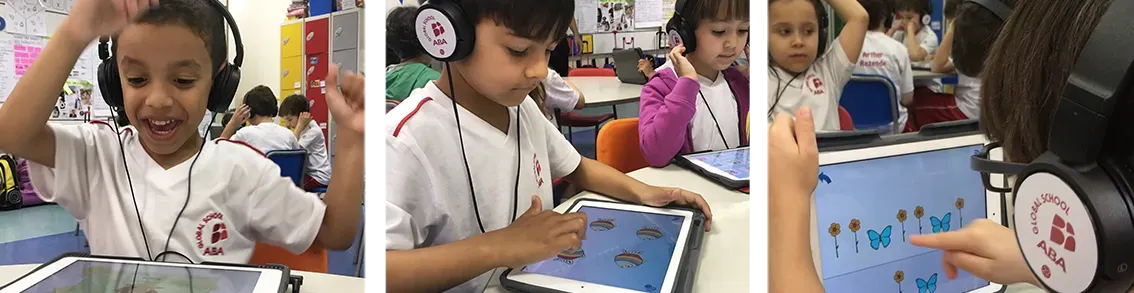
Researchers from UCL and the University of Nottingham found that children in a bilingual immersion school in Brazil made learning gains when using the onebillion software in either Brazilian Portuguese or English, and that proficiency in the language of instruction correlated positively to progress on the app.
After 10 weeks, results showed children made significant mathematical learning gains with the apps, for both languages of instruction, compared to standard practice.
Children in the UK using the onebillion software make significant learning gains in maths
The impact of the onebillion maths apps was assessed in a randomised control trial funded by the Education Endowment Foundation and evaluated by the University of Oxford. Over the course of 12 weeks, children who had been identified as being in the lower half of the class for maths used the onebillion software for 30 minutes a day, 4 days a week. Results showed significant learnings gains amongst those using the apps compared to control groups. The EEF has now added onebillion to its list of Promising Projects.
Pupils who received onebillion made an additional three months' progress in maths compared to the control group.
Boys and girls in Malawi learn maths equally well through onebillion app, countering a global trend of gender differences
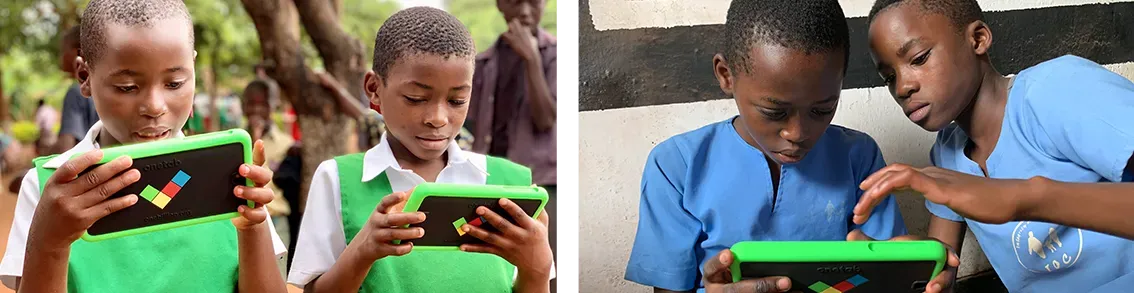
Researchers from University of Nottingham and the University of Malawi found that the use of onebillion software to support the acquisition of reading and mathematics could also equalise learning opportunities for boys and girls in Malawi.
Despite a brief time using the onebillion maths apps, of just eighteen 30-minute sessions on average across the 14-month study period, girls’ attainment in mathematics was similar to that of boys. In contrast, for usual, class-based, teacher-led instruction, girls started to lag behind boys in learning mathematical skills.
XPRIZE and Tanzania field test in remote parts of Tanzania demonstrates accelerated learning for out of school children using onecourse
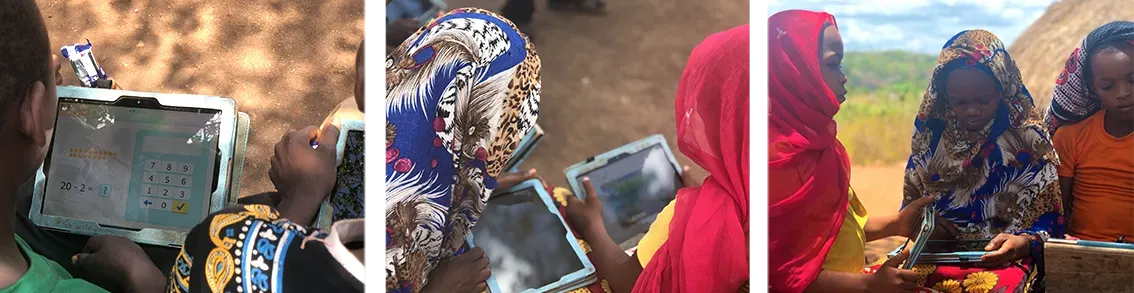
As part of the Global Learning XPRIZE, onecourse and the other four finalist apps were evaluated in a 15-month trial with 2,700 children in Tanzania, to determine the efficiency of the software in a community setting.
At the beginning of the Global Learning XPRIZE field test, less than 10% of the participating children could read a single world in Swahili. After the field test, 45% of these children could read a word, with 30% reading full sentences.
Maths intervention in Canada leads to equalised gender gap and improved learning outcomes
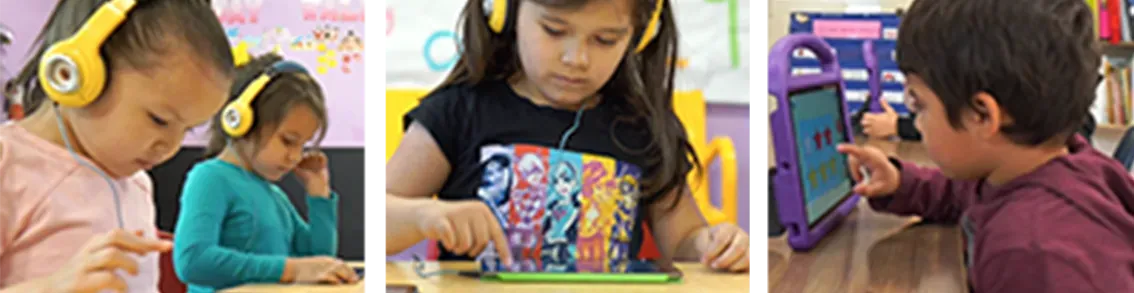
In a 2018 study conducted at David Livingstone school in Winnipeg, children using the onebillion maths apps for 15-20 minutes each day for 6 weeks saw their maths skills improve by 32%, compared to only 10% amongst the control group.
The most significant outcome of this study was the huge improvement in learning and test performance made by those students in the experimental group who had struggled on the pre-test.
Maths app intervention helps to close the gap in mathematics achievement for children at the start of school in the UK
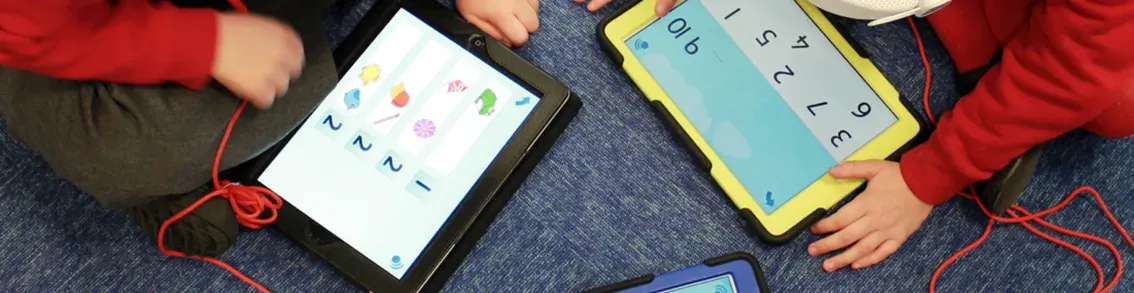
Laura A. Outhwaite and Professor Nicola J. Pitchford recently conducted a series of small-scale studies in primary schools across England.
In four controlled, pilot studies, we found young children in the UK who used the maths apps made strong immediate and sustained mathematical learning gains. Our results showed that using the maths apps helped close the gap in achievement between low-achieving children and their relatively higher achieving peers.
Interactive apps promote learning of basic mathematical skills in children with special educational needs and disabilities in Malawi
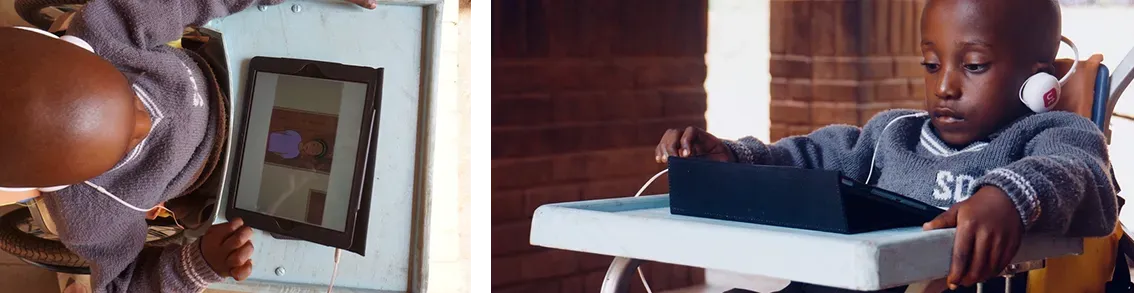
Professor Nicola J. Pitchford from the University of Nottingham acted as the lead researcher for an innovative trial with children with special educational needs in Malawi.
Our results showed children with special educational needs and disabilities were able to interact with the tablet device and maths app software when delivered without additional assistive technology aids. We found that children made significant progress in learning basic mathematics and suggest this technology can provide an alternative means of education for these children.
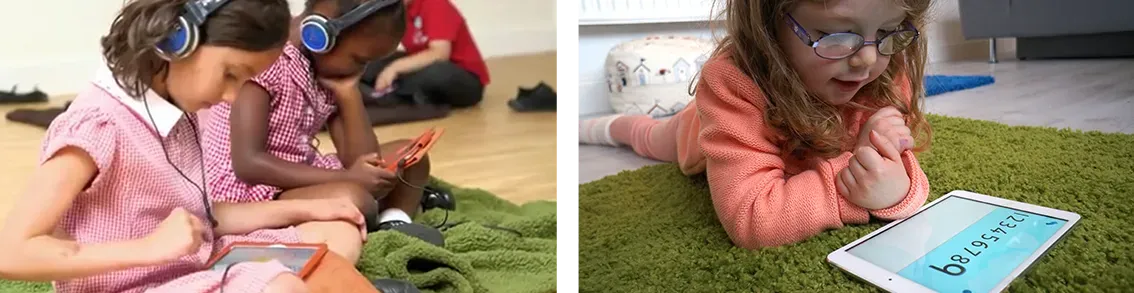
Laura A. Outhwaite and Professor Nicola J. Pitchford from the University of Nottingham ran a similar RCT to that in Malawi, in a primary school in the UK.
In the first randomised control trial of the onebillion maths in the UK, we found significantly greater learning gains in mathematics when children used the maths apps either as a supplementary intervention or instead of a regular daily maths activity, in comparison to standard mathematics practice only. We suggest the onebillion maths apps can be used as part of a well-balanced early years curriculum.
Addition of new maths app equals better learning for children in Malawi
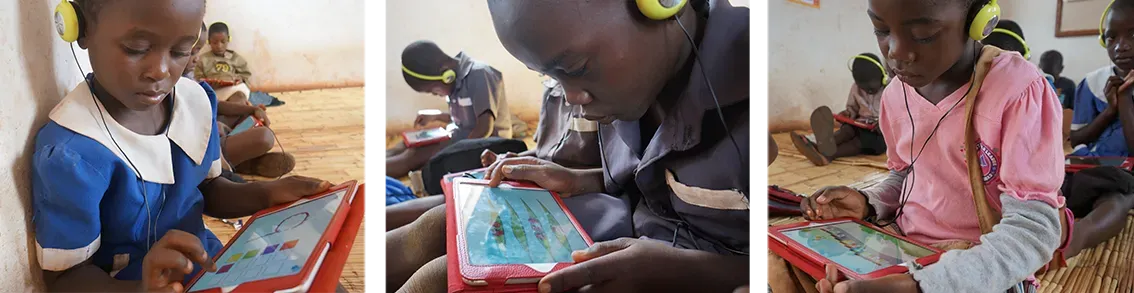
Professor Nicola J. Pitchford from the University of Nottingham acted as the lead researcher for the first RCT in Malawi in 2014.
In the first randomised control trial of the onebillion maths in Malawi, we found the maths apps supported significant learning gains in mathematical skills over and above standard face-to-face mathematics practice or using tablet devices without the onebillion maths software.
Children using onecourse over 2 years made significant gains in numeracy and literacy despite COVID-related disruptions
Imagine Worldwide conducted a 2-year randomised control trial with children in Malawi. Children who used onecourse gained an additional 4.2 months of literacy learning after 13 months of disrupted schooling due to COVID. 72% of the children gained emergent or fluent mathematics status after 13 months, and girls and boys made similar learning gains.
Children in Malawi made an additional 5.3 months of literacy learning compared to control groups during an 8 month randomised control trial
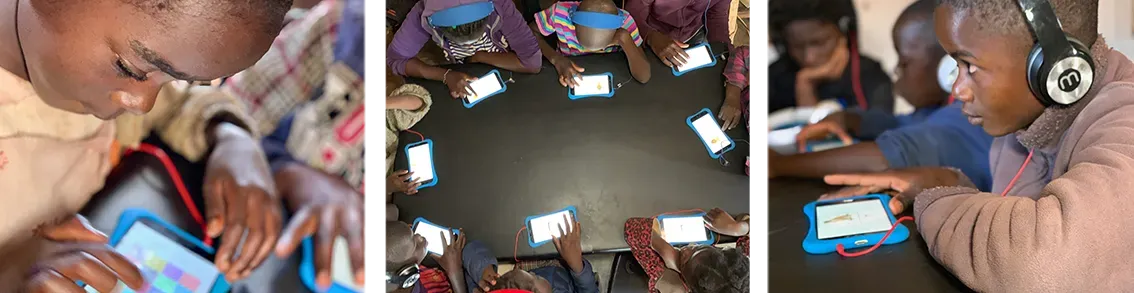
Imagine Worldwide conducted an 8-month randomised control trial in Malawi during 2018-19. Results showed a statistically significant positive effect on gains in literacy and numeracy. They also found an overwhelmingly positive response from parents, teachers and school leaders, the majority of whom reported strong improvement in children’s school attendance, achievement in literacy and numeracy, excitement about school, and confidence as learners.